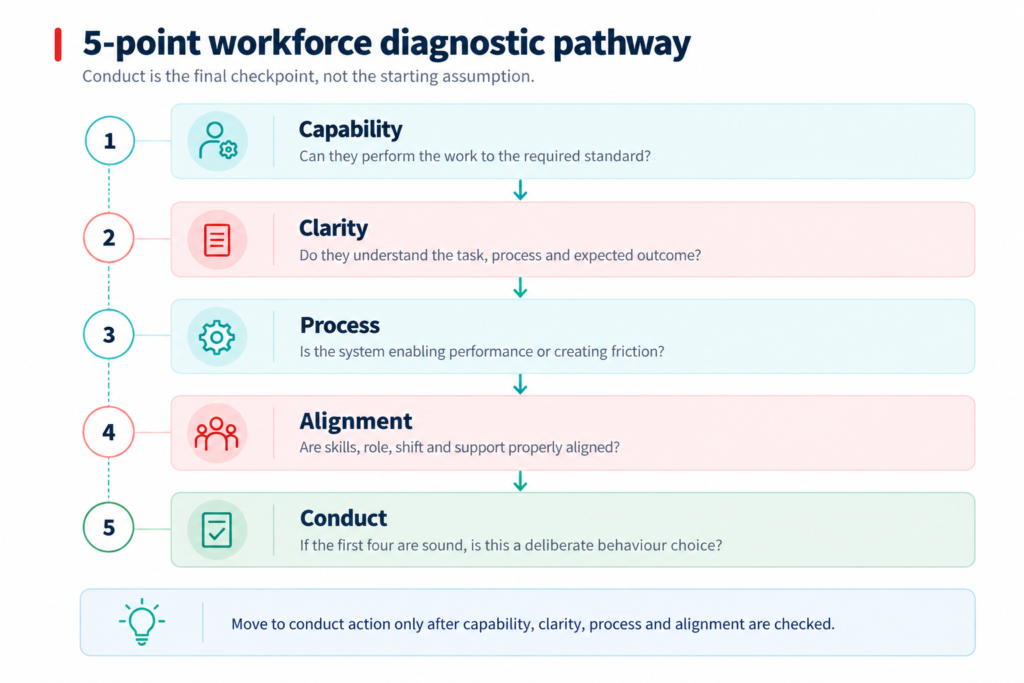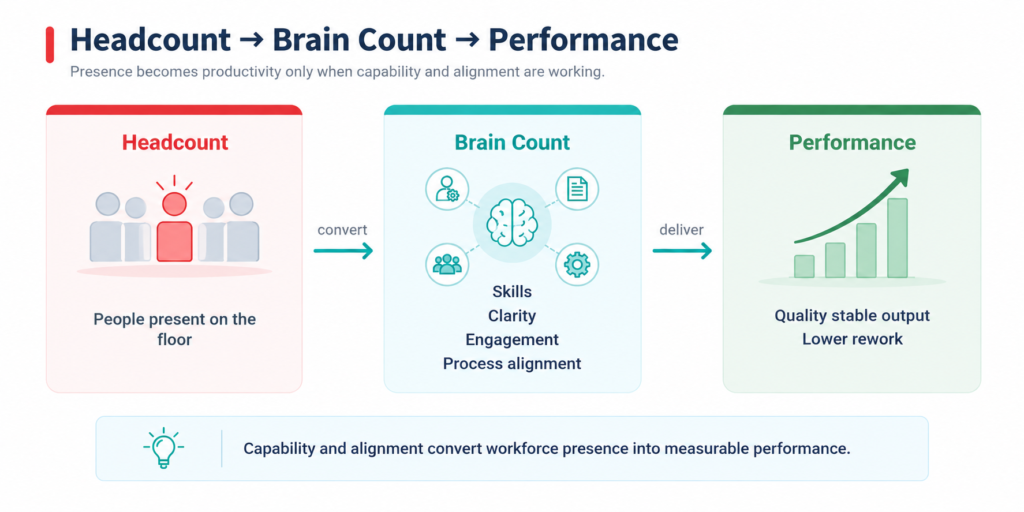


Evaluate staffing solutions by workforce readiness, retention, compliance and accountability.
A plant can fill every sanctioned position and still struggle to run a stable shift. Absenteeism leaves gaps, new joiners need repeated training, and supervisors spend time resolving onboarding issues. A low service fee can hide the cost of disruption.
Choosing a manpower outsourcing company means examining what happens after recruitment. Can the partner keep suitable people ready and available, manage the agreed responsibilities and act quickly when gaps appear?
What your staffing partner should deliver
Expect a partner to understand your roles, shifts and worksite; assess suitable candidates; coordinate checks and onboarding; and manage agreed workforce administration. When comparing manpower outsourcing services, ask who owns each activity, how exceptions are escalated and what evidence the plant receives.
Headcount shows how many people were deployed. The following five checks help establish whether those people can contribute consistently.
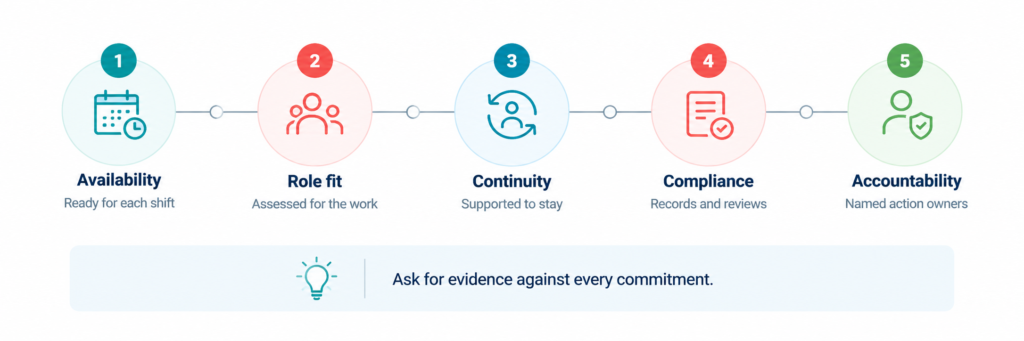
Five checks for selecting a staffing partner
Use the same questions when comparing manufacturing staffing services. Ask for process examples and records that demonstrate how each commitment is managed.
1. Workforce availability
Can the partner respond to vacancies, absences and delayed joinings? Each requires a defined response. Ask how replacements are assessed, who receives shift-related escalations and how hiring capacity changes when demand increases.
Request an open-position tracker, replacement timelines and a named escalation owner.
2. Skill and role fit
A matching job title does not establish suitability for your plant. Assess technical ability, required certifications, shift readiness, commute feasibility and understanding of working conditions. For contract staffing, these checks help avoid placements that fail soon after joining.
Request a role-specific assessment checklist. Count a worker as deployment-ready only when the agreed assessments, verification and induction are complete, shift expectations are understood and travel arrangements are workable. Use this definition consistently in fill-rate reporting.
3. Attendance and retention
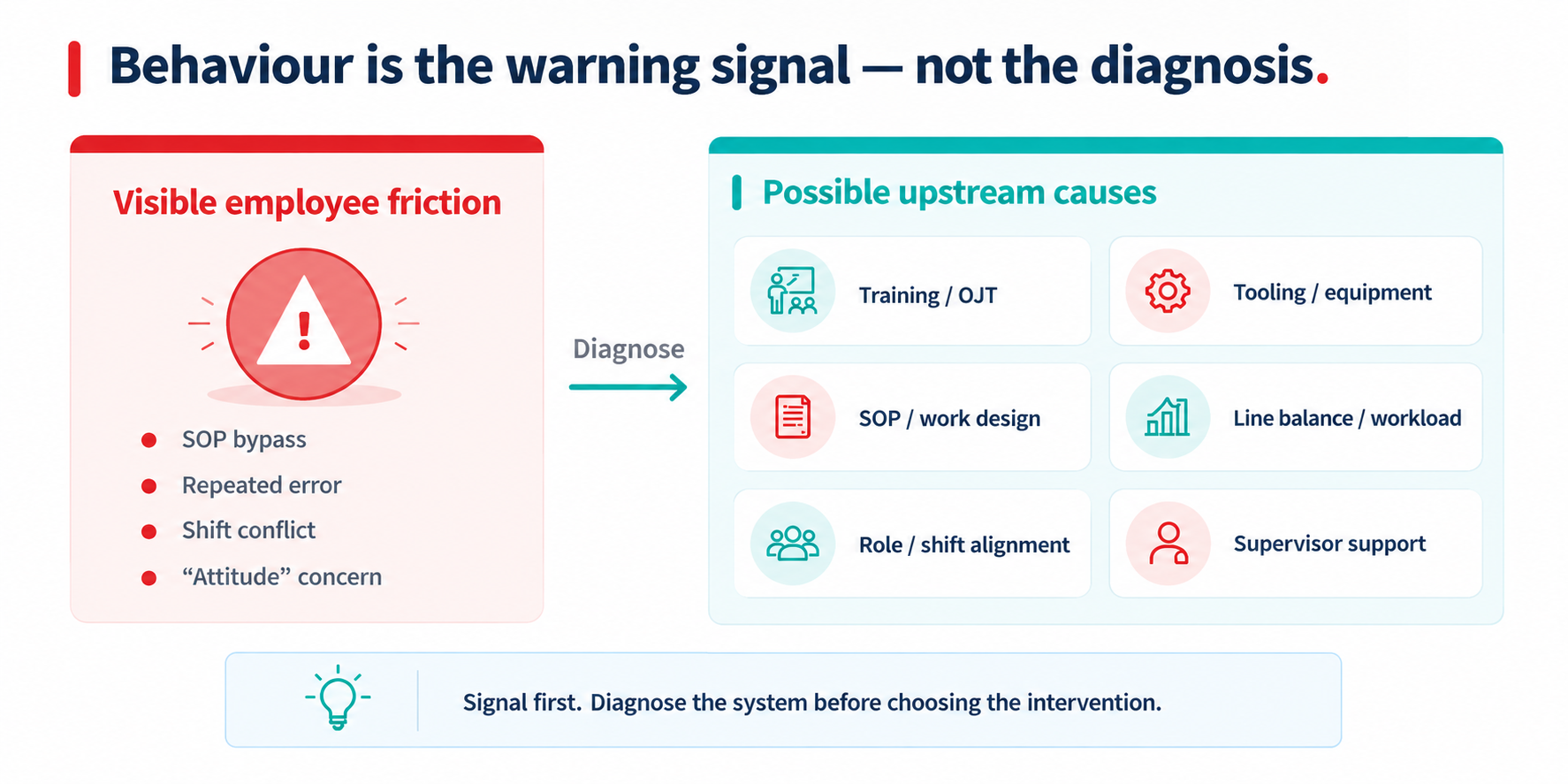
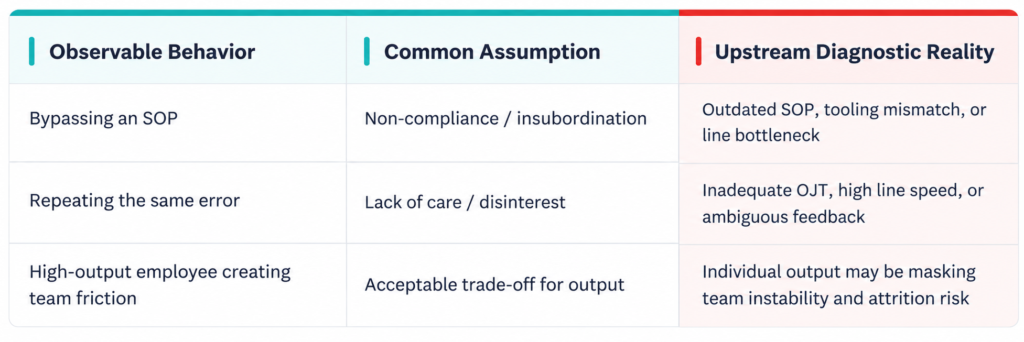
Clear job expectations, reliable payroll, practical transport arrangements and accessible worker support all influence continuity. Ask how induction connects workers with supervisors and how early attendance problems or grievances are addressed.
Review early-attrition trends and recurring exit reasons, together with the corrective actions taken.
4. Compliance and administration
Compliance needs defined ownership and regular review. Check employment documentation, payroll accuracy, applicable verification and medical checks, working-hour records, statutory documentation and audit support. Ask how missing records and payroll exceptions are resolved.
Before appointment, confirm that the proposed activities can be outsourced under the requirements applicable to your plant, including any restrictions or exceptions for core activities. Agree principal-employer and provider responsibilities. Request a compliance matrix and sample review records; documentation alone does not establish that the arrangement is permissible.
5. Reporting and accountability
Reporting should show fill status by role and shift, attendance, joining readiness, incomplete checks and unresolved issues. A monthly deployment total cannot explain where action is needed.
Request a sample dashboard with action owners, resolution dates and a review schedule. Confirm who can make decisions when an issue affects the next shift.
Match the service model to the responsibility
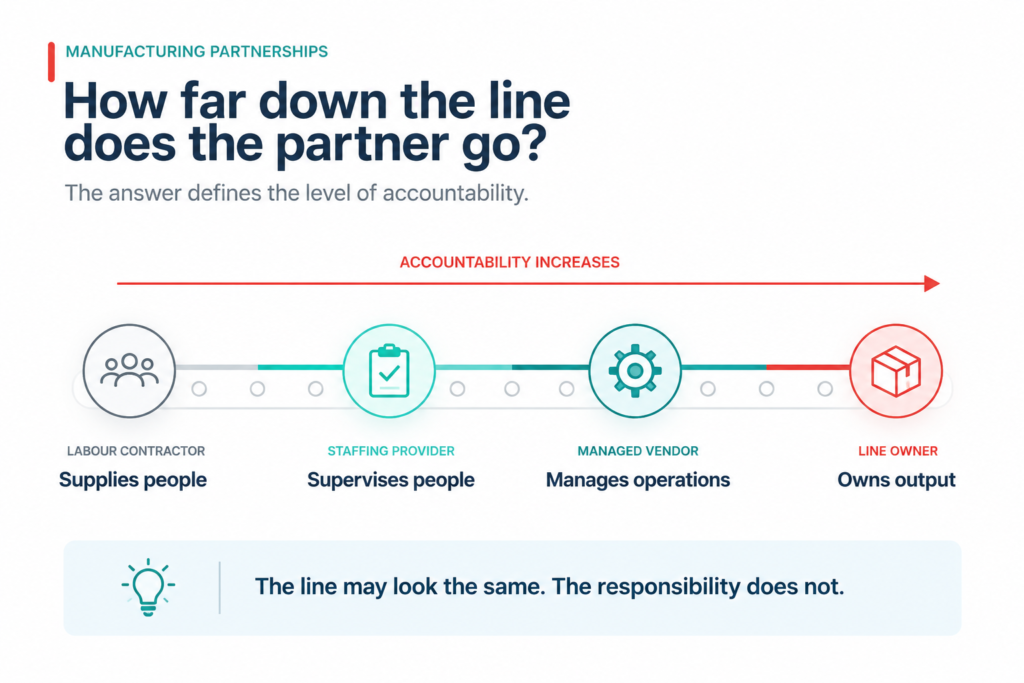
Manpower supply services commonly centre on providing workers against a requirement. Managed staffing can extend to planning, onboarding and workforce support. Compare the proposed responsibilities before comparing prices.
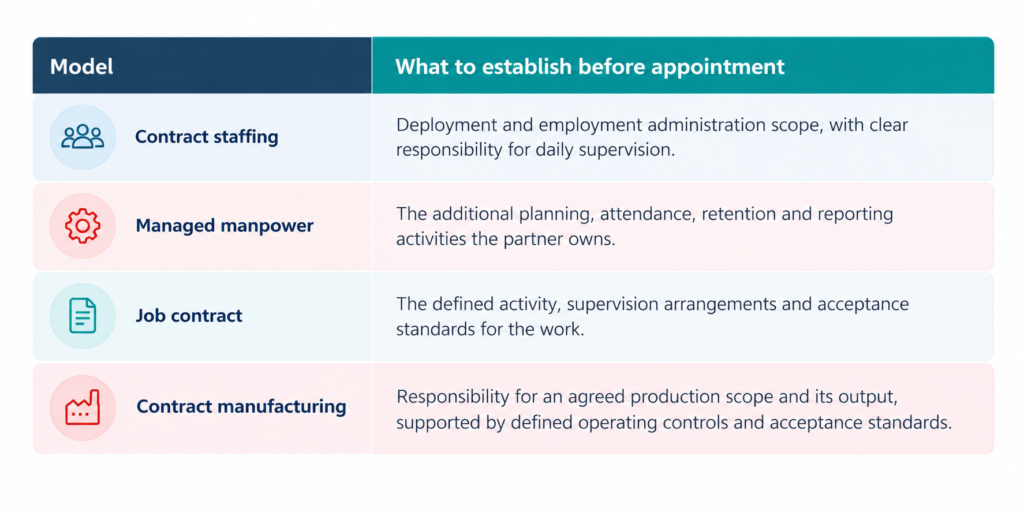
These descriptions do not replace the contract. Record who supervises workers, provides training, controls equipment and materials, and approves process changes. A staffing engagement should not imply responsibility for production output unless the scope and operating authority support it.
Turn commitments into measurable SLAs
Service-level agreements (SLAs) should define the measure, target, reporting period, data source and action owner. Start with measures the provider can influence.
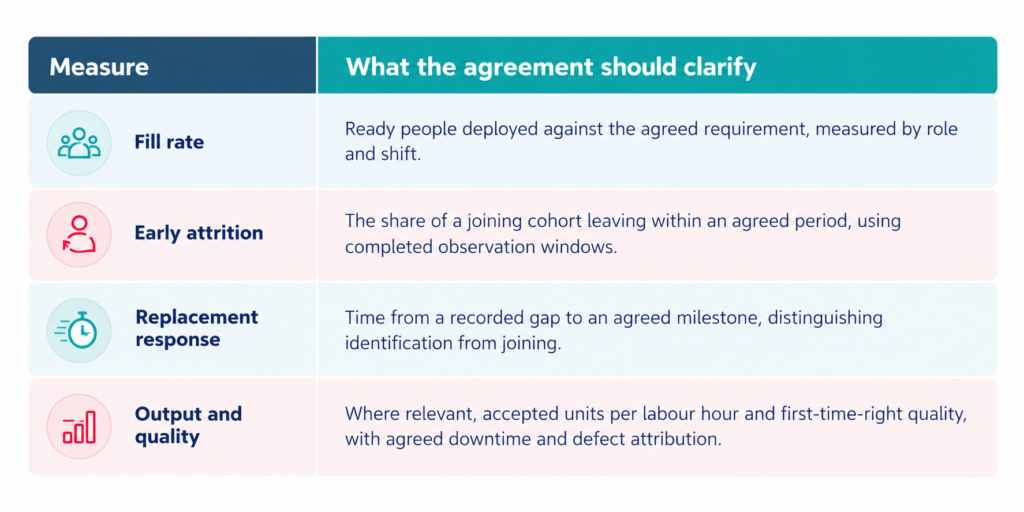
Any service credit, penalty or reward needs a defined trigger, supporting evidence, exclusions and a review process. Compare total staffing cost, including recruitment, training, replacements and internal administration. Contract staffing is not automatically cheaper than permanent hiring.
Choose commercial terms that fit the scope
Outcome-based staffing can work when results are measurable and the provider can influence them. For output-based billing, staffing responsibilities must align with control over supervision, equipment, materials and approvals. Agree how downtime, quality failures and changed requirements will be treated.
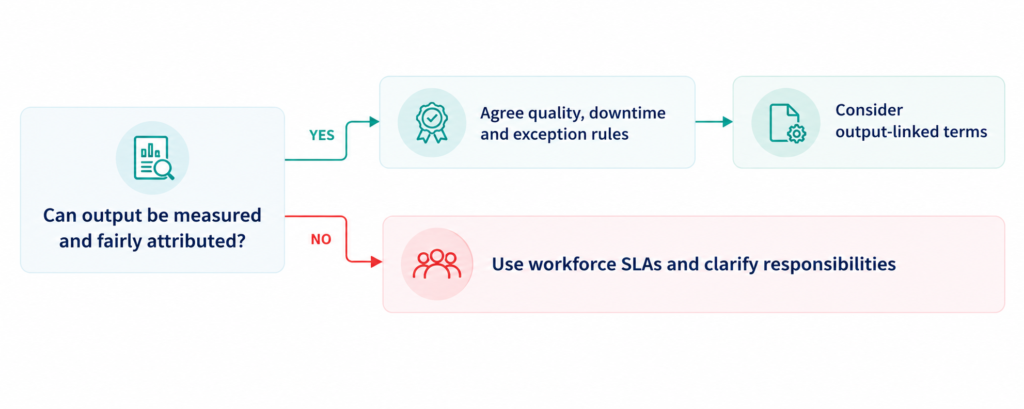
A headcount-based fee can still carry clear workforce SLAs. The billing label alone does not establish accountability.
Decide how many vendors the plant needs
Vendor consolidation can simplify reporting and escalation when one partner has the required capacity and reach. Specialist skills or regional needs may justify additional providers. Check backup capacity and concentration risk before committing every requirement to one company.
Look for relevant evidence of delivery
Layam’s staffing management services cover candidate assessment, induction, attendance management, payroll and workforce support. Map these activities to the responsibilities your plant needs.
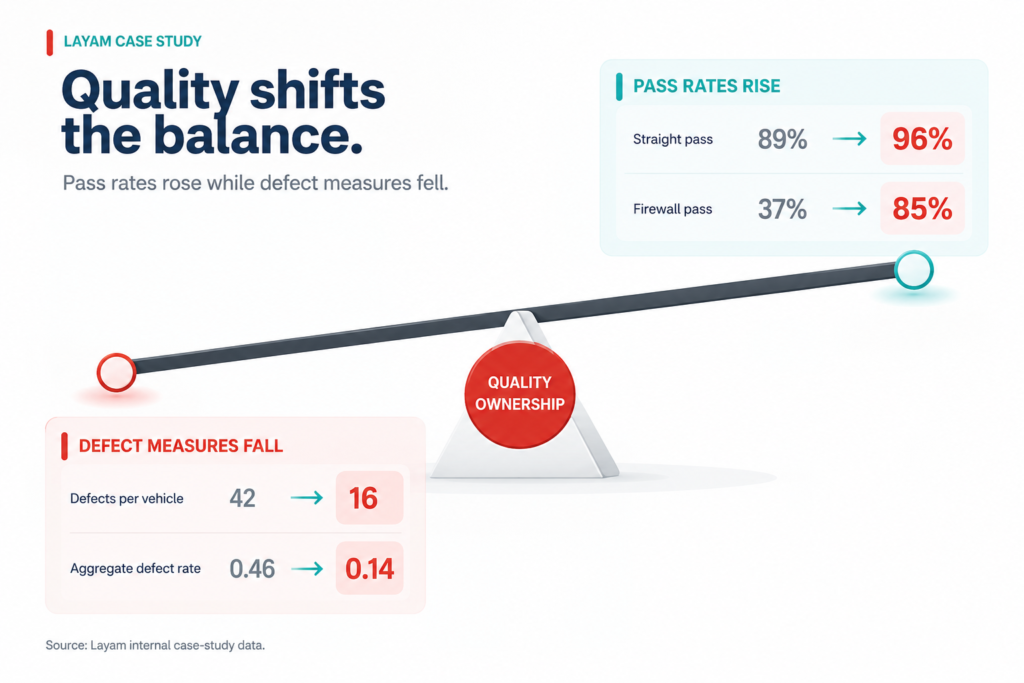
In an automotive engagement, Layam completed 400 production-engineer hires within two weeks. The process considered role requirements, shift patterns, transport feasibility and supervisor readiness. This demonstrates mobilisation capability; ongoing attendance, retention and performance should be evaluated through separate records and SLAs.
Make the final comparison on evidence
Before appointment, obtain a workforce plan, assessment checklist, replacement process, compliance matrix, sample dashboard and a proposal defining scope and commercial terms. Review these against the five checks rather than relying on the candidate database or service fee alone.
Choose a manpower outsourcing company that can explain what it owns, demonstrate how it delivers and name who acts when performance slips.
Request a plant workforce assessment to discuss the right scope for your plant.