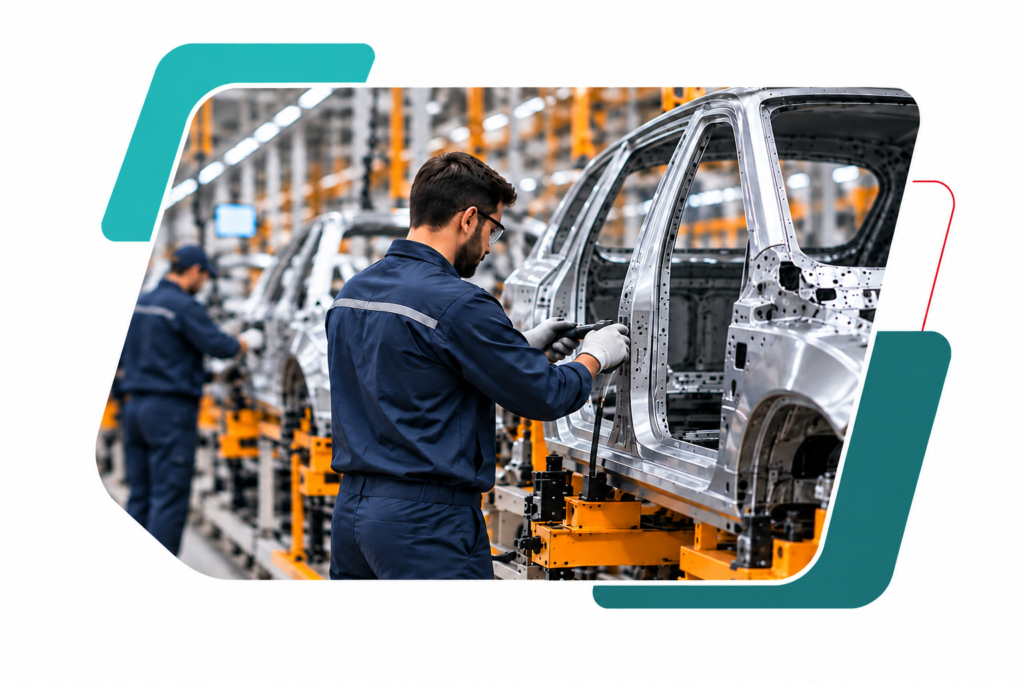
A leading automotive manufacturer with plant-based operations and production-engineering roles across multiple departments.
The Challenge
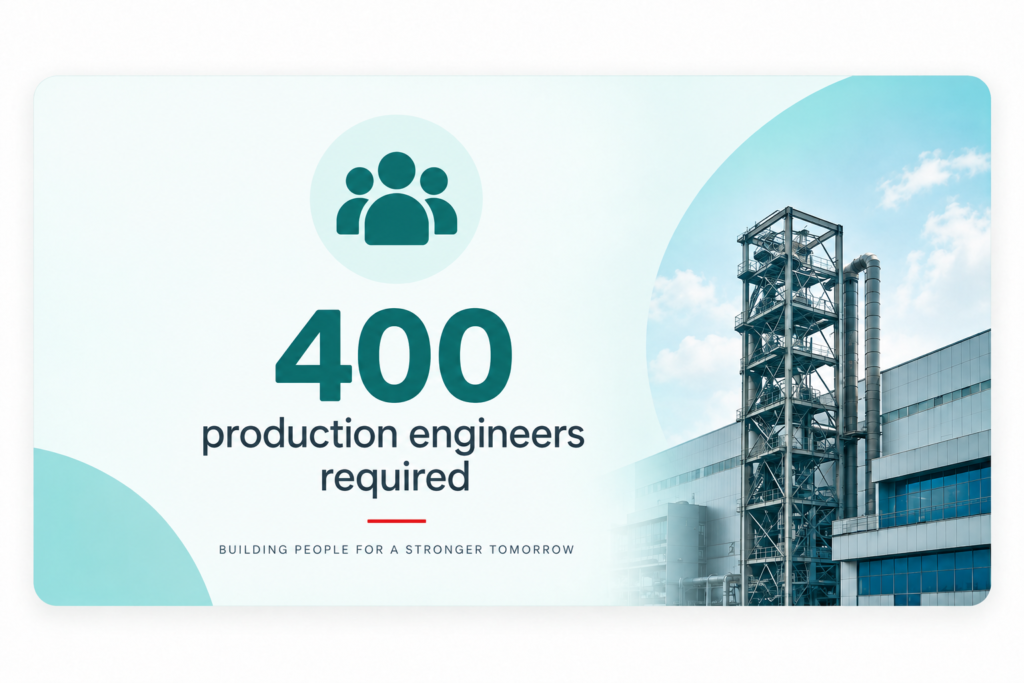
The client needed to hire 400 production engineers with specialised plastic technology expertise across identified regions, within a two-week delivery window.
The challenge extended beyond sourcing technically relevant profiles. Candidates also had to be realistically deployable to the plant: able to manage shift patterns and transport requirements, progress through screening and interviews at volume, and remain ready to join.
Layam therefore designed the mandate as a workforce mobilisation programme, starting with plant realities and working backwards from the required hiring outcome.
400
Production Engineers
2 Weeks
Delivery Window
Plant-Based
Deployment Model
The Mandate at a Glance
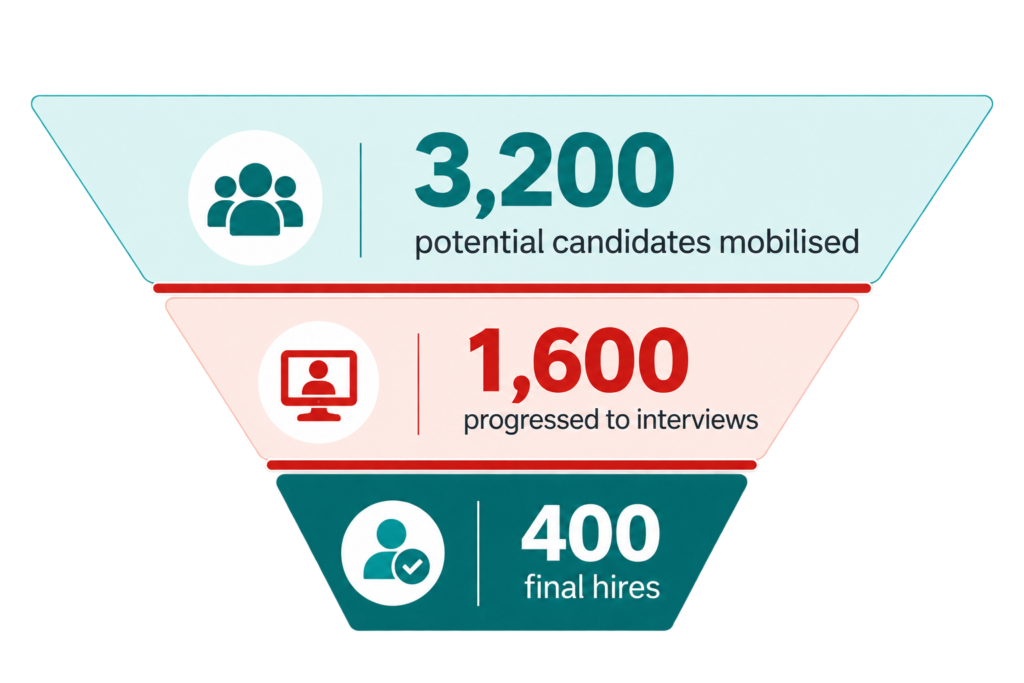
3,200
potential candidates mobilised
1,600
progressed to interviews
30+
talent locations scoured
2 weeks
400 hires completed
THE APPROACH
01
Plant Assessment
and Workforce Mapping
Before opening the hiring funnel, Layam conducted an on-site plant assessment to translate the workforce brief into the realities candidates would face after joining. The sourcing plan was then built around candidates who could genuinely be deployed.
Deployment location, role scope and reporting expectations
Shift patterns and operating schedules
Plant accessibility, commute and transport feasibility
Shop-floor conditions, safety requirements and physical work environment
Practical factors likely to influence joining and early retention
The assessment became the working workforce map for the recruitment team. In manufacturing hiring, technical suitability is only one part of the fit equation; shift patterns, commute feasibility and the physical work environment also influence whether a candidate can realistically join and stay.
02
Building the Funnel
Backwards from 400 Hires
For a mandate of this size, planning could not begin with the vacancy number alone. Layam worked backwards from the 400-hire requirement using a planned 1:8 funnel ratio.
The 1:8 ratio also defined the operating capacity required across the programme: how many institutions and talent pockets to activate, the likely size of each drive, recruiter bandwidth, screening throughput, client interview slots, panel load, documentation capacity and decision speed.
It also gave the team a live view of funnel health. If one stage yielded below expectation, mobilisation or screening activity could be adjusted early, before a gap surfaced at the end of the delivery window.
03
Mapping Viable Talent Catchments
The specialised plastic technology requirement ruled out a broad, generic sourcing campaign. Layam mapped and assessed 30+ talent locations across the identified regions, including universities, colleges, technical institutions and surrounding talent pockets where the required skill base was most likely to be concentrated.
Each location was assessed for both talent depth and deployability. Travel time, transport access, shift practicality and proximity to the plant helped narrow the search to catchments where technically relevant candidates were more likely to progress through to joining.
04
Mobilising Candidates with Role Readiness Built In
With priority catchments identified, the programme moved into institutional outreach and campus mobilisation. Execution covered institutional coordination, drive scheduling, candidate communication, registrations, role briefings, profile collection and batch progression through the first stage of the funnel.
The objective was not maximum footfall. It was qualified depth: enough relevant candidates in the funnel, with an early and realistic understanding of the role, shift pattern and working environment.
05
Screening for Technical Fit and Joining Viability
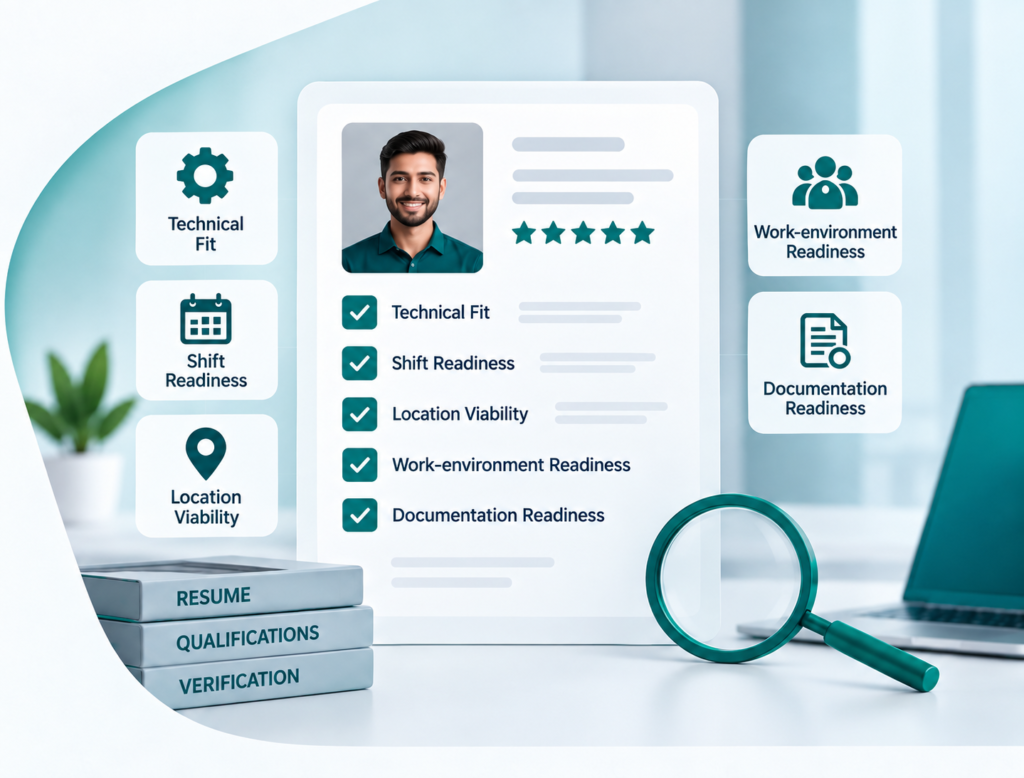
Initial screening narrowed the pool before client interviews. Alongside technical and educational relevance, practical joining factors were addressed early so that interview capacity was reserved for candidates with a realistic likelihood of joining.
Technical fit:qualification and exposure relevant to production engineering and plastic technology
Shift readiness:ability to work within the required operating schedule
Location viability:practicality of commuting to or relocatingfor the plant
Work-environment readiness:clear understanding of the manufacturing setting and role expectations
Documentation readiness:ability to move efficiently through selection and verification
06
Managing Interview Throughput at Scale
At the interview stage, recruitment became a throughput-management exercise. Candidates moved in controlled batches while panel availability, reporting times, queues, selection status and follow-ups were tracked continuously.
Layam coordinated the interview engine to keep candidate flow steady and move selected candidates quickly into the next stage, preventing avoidable delays from accumulating across the funnel.
07
Running Workstreams in Parallel
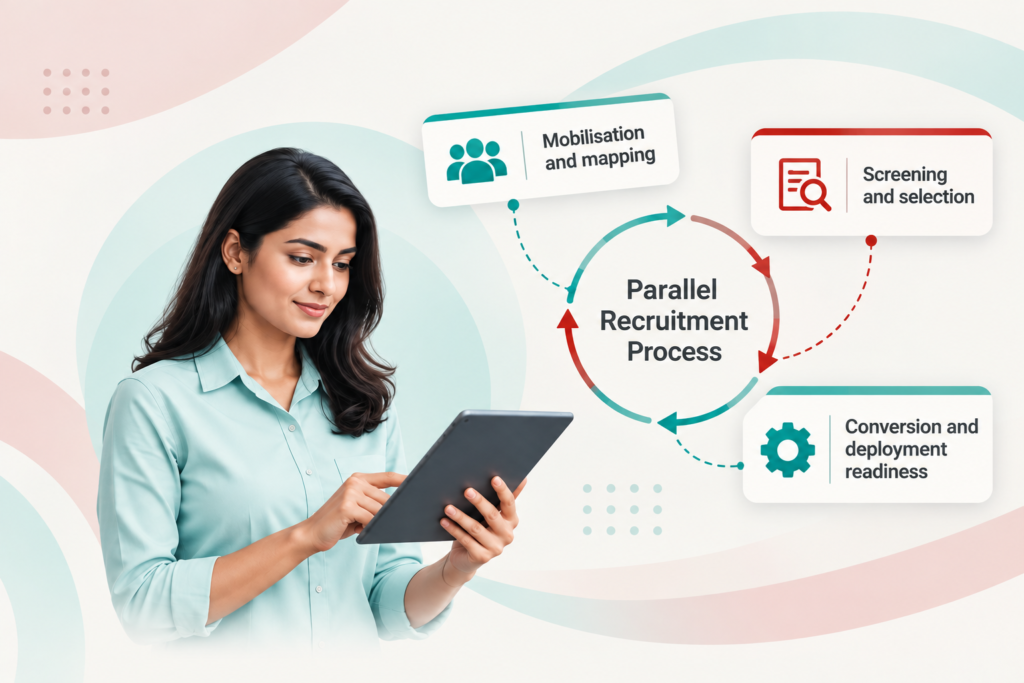
The two-week delivery window ruled out a linear recruitment process. Mobilisation, screening, interviews, documentation and offer processing ran in parallel, with candidate batches progressing through multiple stages simultaneously.
Mobilisation and mapping
Plant assessment, workforce alignment, talent catchment mapping and institutional outreach
Screening and selection
Campus drives, initial screening, interview batching and client evaluation
Conversion and deployment readiness
Final selection, documentation, background verification, offers and joining preparation
08
Managing Conversion Through to Joining
Selection was not treated as the finish line. Layam continued to manage candidate communication, documentation, offer processing and background verification, where applicable, through the offer-to-join stage.
In mass hiring, every late-stage dropout reopens the workforce gap. Maintaining momentum after selection was therefore as important as building sufficient funnel depth at the beginning.
09
Preparing Supervisors for Workforce Integration
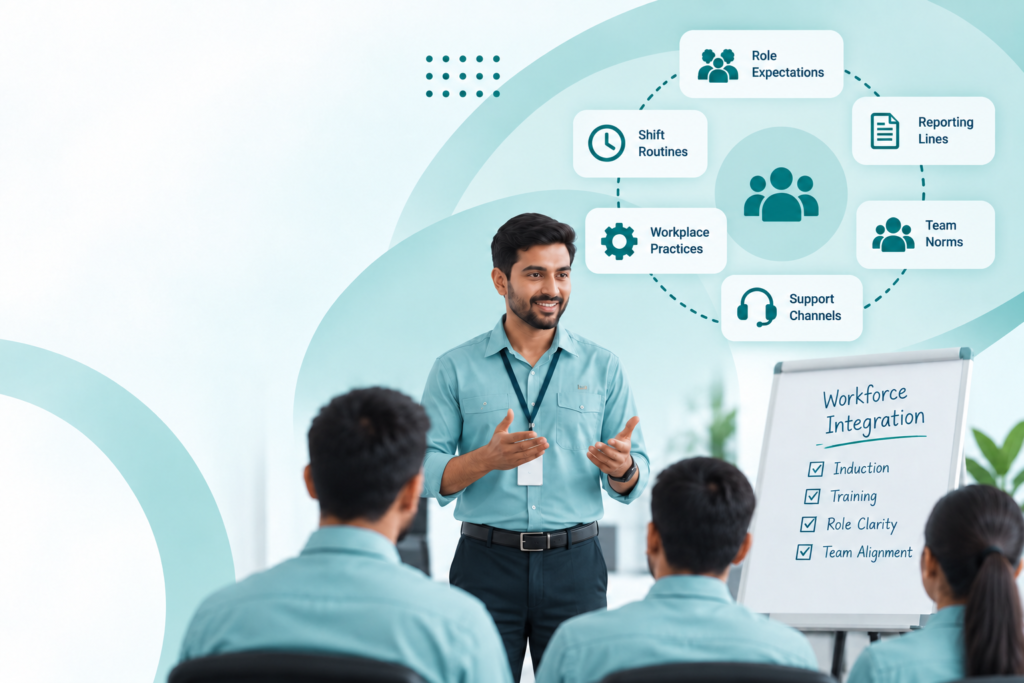
Hiring at this scale also places pressure on the receiving environment. Layam supported a supervisor sensitisation initiative to help newcomers integrate into plant operations with clearer practical guidance and a more structured transition.
Supervisors were equipped to reinforce role expectations, reporting lines and shift routines, team norms, immediate workplace practices and available support channels. The initiative created a practical bridge between recruitment, induction and day-to-day workforce integration.
The Outcome
Layam fulfilled the requirement for 400 production engineers within two weeks, with selected engineers deployed across different departments within the client organisation.
To sustain the required conversion rate, Layam mobilised 3,200 potential candidates, progressed 1,600 to interviews and assessed 30+ talent locations across the identified regions. Each final hire required sufficient depth at the top of the funnel to absorb natural drop-offs through mobilisation, screening, interviews and final conversion. That meant building the talent universe before the first drive began, rather than reacting to shortfalls later.
Why the Model Worked
High-volume manufacturing hiring depends on more than sourcing.
Candidate availability has to align with plant access, shift viability, interview capacity, offer-to-join conversion and the readiness of supervisors to receive new joiners.
Layam connected these variables through one workforce mobilisation model, starting with plant-level requirements and carrying them through to joining readiness.
That end-to-end coordination turned a 400-hire target into a deployable workforce within two weeks.