Your plant. Your standards. A dedicated team responsible for running an agreed production operation.
A manufacturer may own the building, equipment and product but still spend every shift coordinating workforce availability, output, quality checks and material issues. When these activities sit with different teams, it can be difficult to see who is responsible when a production target is missed.
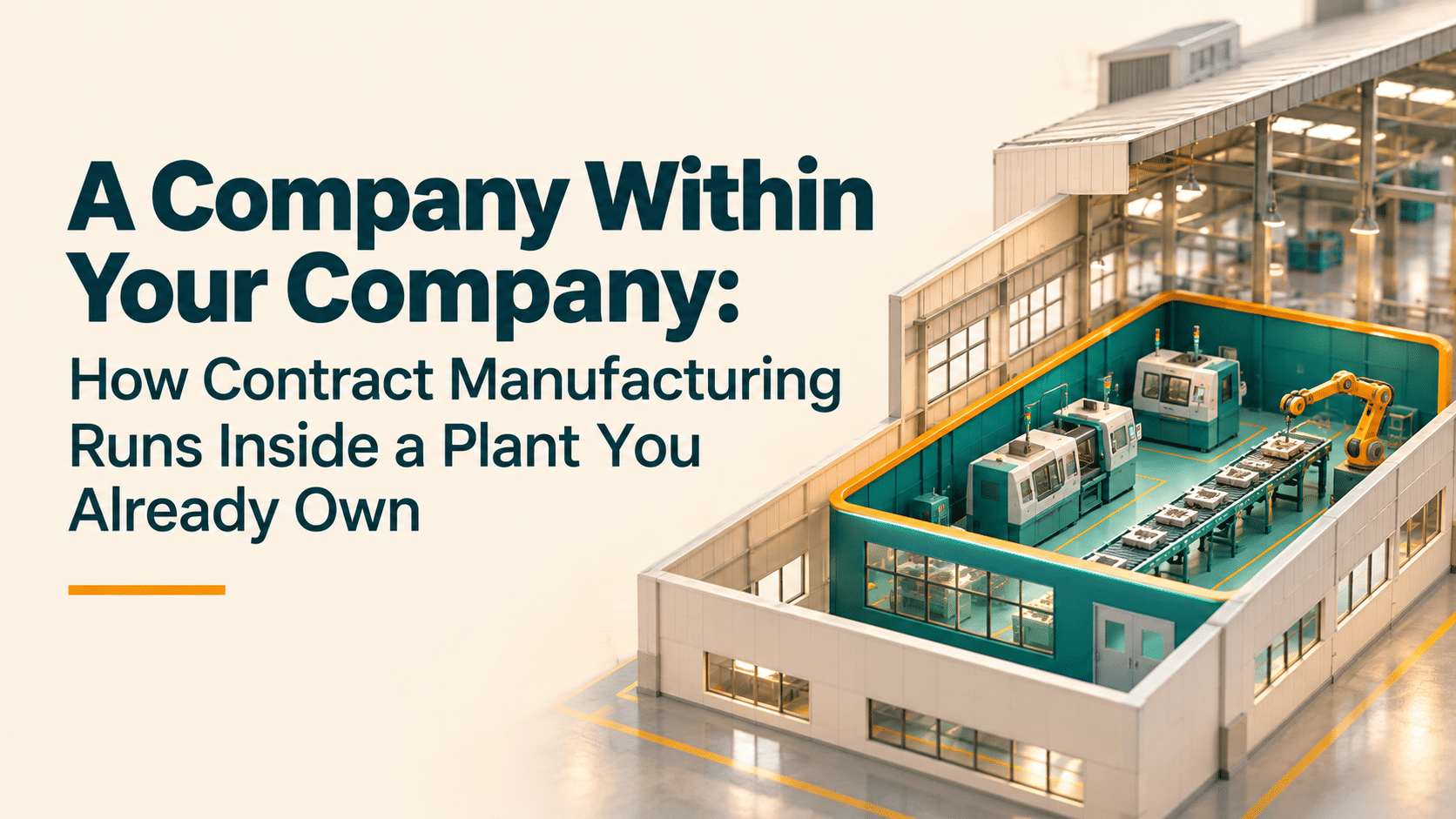
That is where contract manufacturing services can play a different role. Instead of moving production to another facility, the manufacturer entrusts an agreed line or production segment to an operating partner inside its own plant.
The factory remains yours. What changes is who manages the assigned work and is accountable for its agreed results.
What does “a company within your company” mean?
A company within a company is a way to run a defined production line or segment inside a plant the manufacturer already owns. The manufacturer keeps control of the facility, product standards and overall priorities. The operating partner manages day-to-day execution, supervision and agreed output and quality responsibilities within that scope.
At Layam, a dedicated site manager brings operators, supervisors and relevant quality or support teams under one operating responsibility. This is also described as a company-in-company model. It refers to an embedded operating team, not a separate legal company.
For manufacturers considering plant operations outsourcing, the first step is to agree where the partner’s responsibility begins and ends.
Who owns what inside the plant?
This division needs to be clear before the first shift. Here is the practical split used to explain the model:
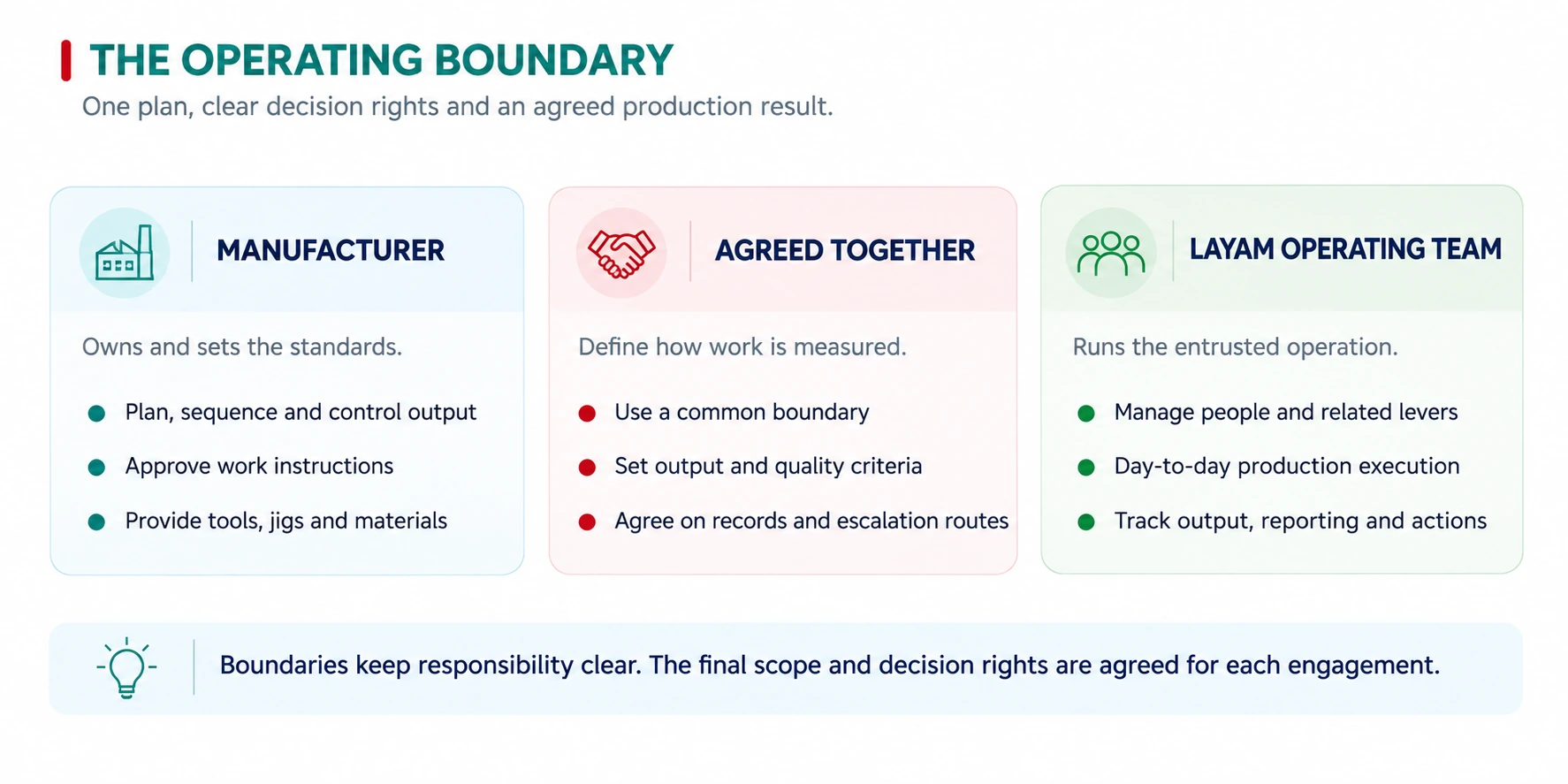
For example, if parts arrive late, Layam’s on-site team can record the impact, adjust work within its authority and escalate the shortage to the plant team that manages supply. If a defect comes from an assembly step Layam runs, its supervisors can contain the issue, investigate the cause and verify corrective action with the relevant quality authority. This clarity also matters when considering vendor consolidation on the shop floor: combining suppliers only helps when one team can coordinate the agreed work.
In both cases, there is a clear record of what happened, who acts next and whether the line recovered.
What changes during a production shift?
The practical value of in-plant contract manufacturing becomes visible in how the shift is managed. Instead of leaving each issue for a different contractor or department, the operating team joins four daily activities:
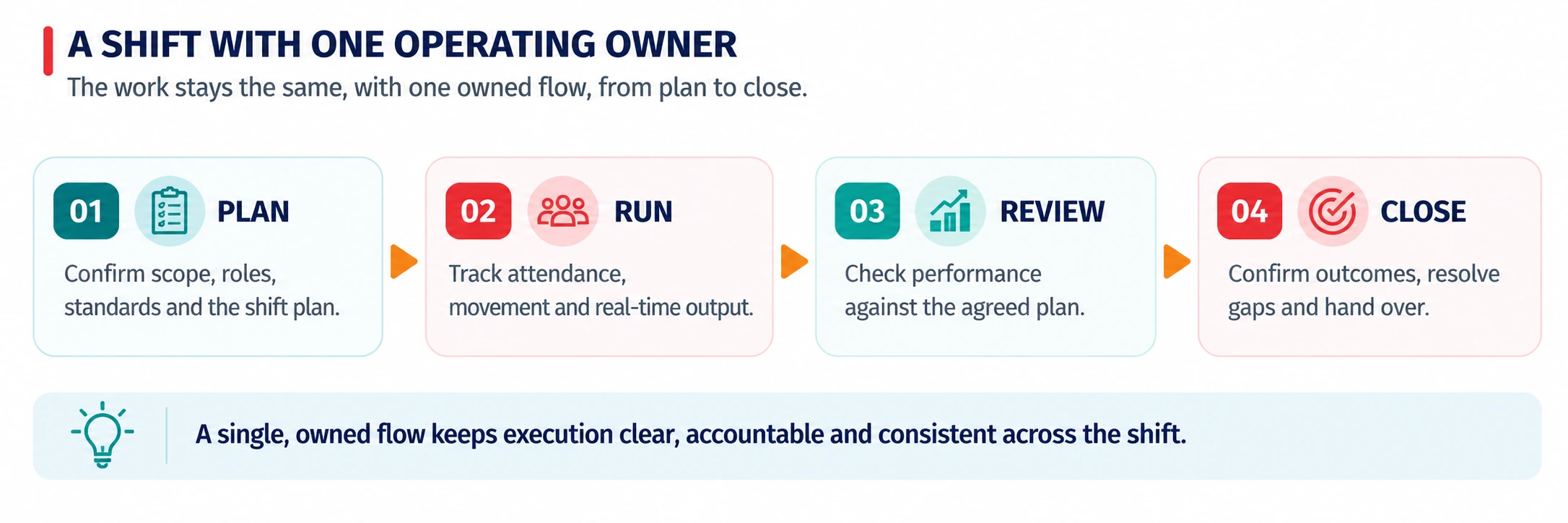
Before the line starts, the site manager checks skill coverage, tools, materials and work instructions. During production, supervisors compare output against plan and respond to station delays. Quality checks catch problems at agreed stages. At shift change, the next team receives production results, open issues and recovery actions. Labour shortage, attrition and absenteeism on the line must still be addressed, but the shift review makes gaps visible earlier.
This is how manufacturing excellence becomes practical: line balancing, 5S, work studies and corrective action are used to address specific losses, rather than treated as separate improvement slogans.
How to hand over a production line without losing control
A production line should not be handed over overnight. A controlled transition is usually built around four questions:
- What work is included? Define the line or segment, its inputs, accepted output, adjacent functions and limits of authority.
- What does performance look like today? Establish an agreed baseline for output, quality, skills, equipment, material flow and recurring delays.
- Is the operating team ready? Check training, safety requirements, approved work instructions, supervision and escalation routes before responsibility begins.
- How will both teams review delivery? Agree reporting frequency, corrective-action ownership, change approvals and the treatment of constraints outside the partner’s control.
The purpose is not to reduce the manufacturer’s oversight. It is to make the delegated operation easier to see, manage and improve.
Which KPIs show whether the model is working?
Headcount is important, but a full attendance sheet does not tell you whether the line delivered. A useful performance review looks at:
- Output: accepted units compared with the agreed production plan.
- Quality: straight pass ratio, defects, rework and repeat failure patterns.
- Process performance: cycle-time adherence, bottlenecks and line efficiency.
- Continuity: shift coverage, material shortages, downtime causes and recovery actions.
- Cost: operating cost or cost per accepted unit, where the scope allows a fair comparison.
These measures should be read together. A line may produce more units while creating avoidable rework. Productivity per employee is the wrong KPI for a line partner when used on its own: it can hide material delays, equipment availability, model mix and rejected output. A better question is how much accepted output the line delivered under the agreed conditions.
Where appropriate, commercial terms can follow agreed output and quality measures. The contract must also state how external constraints, changes in volume or process and responsibilities for losses are handled.
What has this approach delivered in practice?
In a published automotive engagement, Layam combined trained production and inspection teams, on-site supervision, stage-wise quality checks and corrective-action reporting. Incoming inspection, in-process checks and final quality gates worked as connected controls rather than isolated tasks.
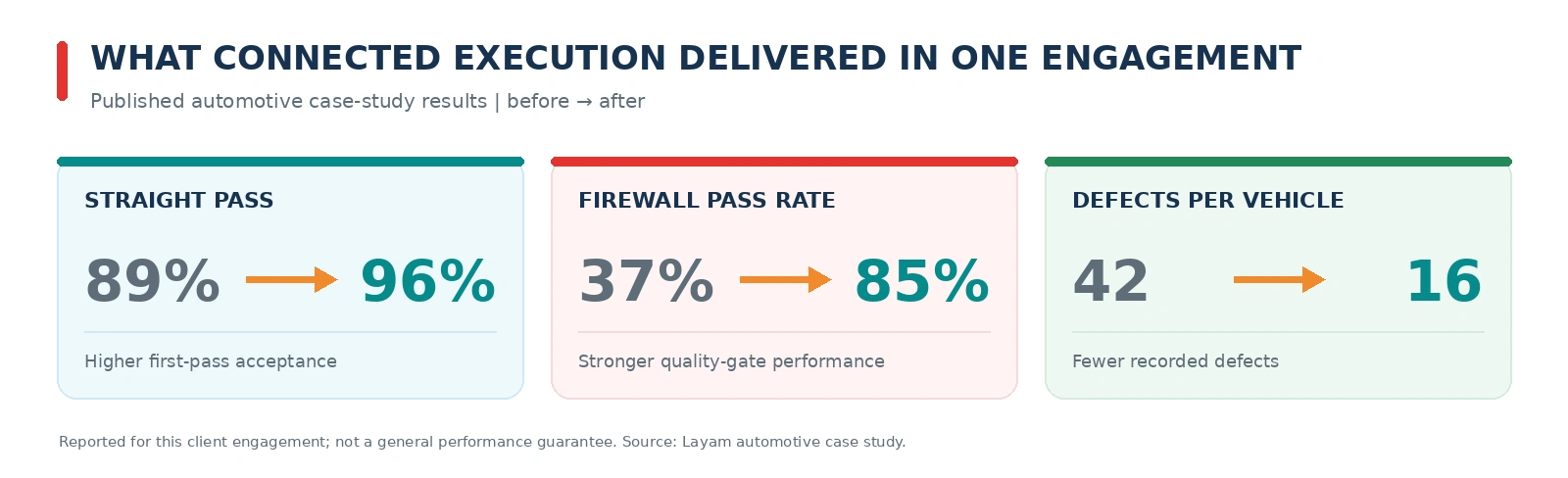
The case study reports straight pass performance moving from 89% to 96%, firewall pass rate from 37% to 85%, and defects per vehicle falling from 42 to 16. Read the full Layam automotive case study.
The lesson is not that every plant will achieve the same improvement. It is that production teams can act faster when they know where a defect started, who should correct it and whether the fix has worked.
When is this model a good fit?
An embedded operating model is worth considering when a manufacturer has a definable production line or segment, approved processes and measurable output and quality standards. Some businesses begin with production support outsourcing for individual activities. Contract manufacturing becomes relevant when a connected production operation needs one team responsible for its daily execution and agreed results.
It may not be the right solution if the requirement is simply additional people, or a single independent task such as inspection. In Layam’s service structure, these needs may be better suited to Staffing Management or Job Contract respectively. The distinction is between supporting an activity and managing an agreed production operation.
It also cannot solve every plant issue on its own. If machines repeatedly fail or materials are unreliable, those dependencies must be addressed and assigned to the right owner. Accountability works only when it matches the partner’s real authority.
Keep your plant. Give each production result a clear owner.
You do not have to hand over the factory to bring more accountability to its daily operations. Contract manufacturing services can give a defined production line or segment its own operating team, while the manufacturer keeps the plant, product standards and overall direction. The value comes from clear responsibilities and measurable results, not a larger deployment number.
If you are considering this approach, start with the line, the expected output and the constraints that slow it down. Explore Layam’s Contract Manufacturing services.