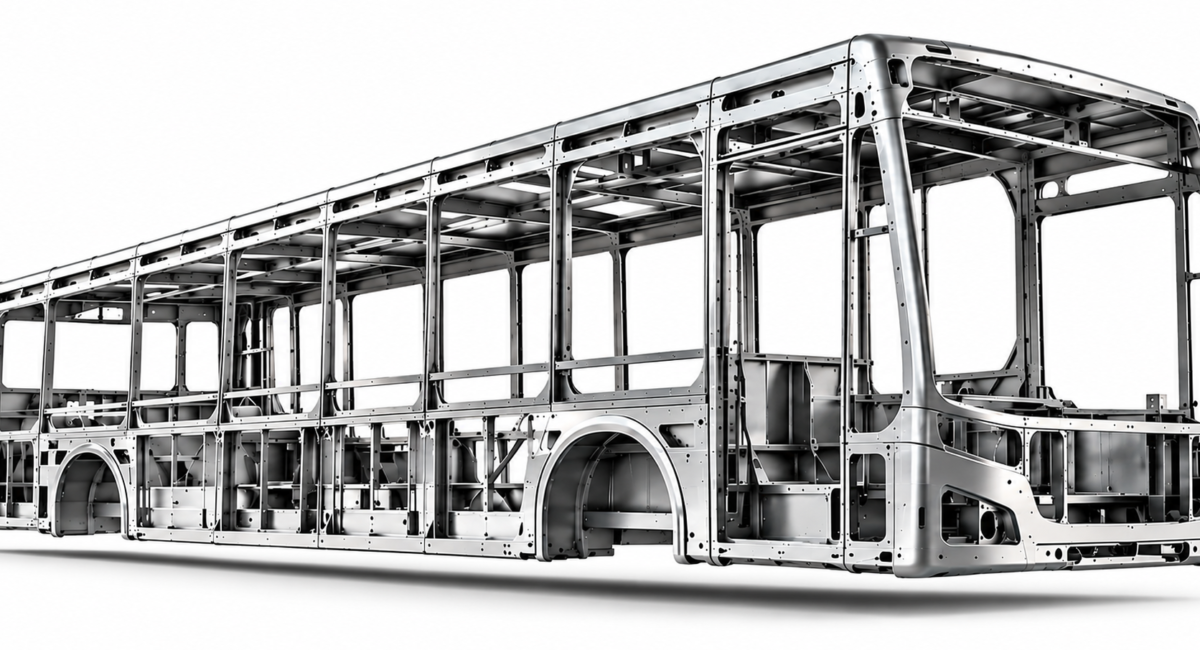
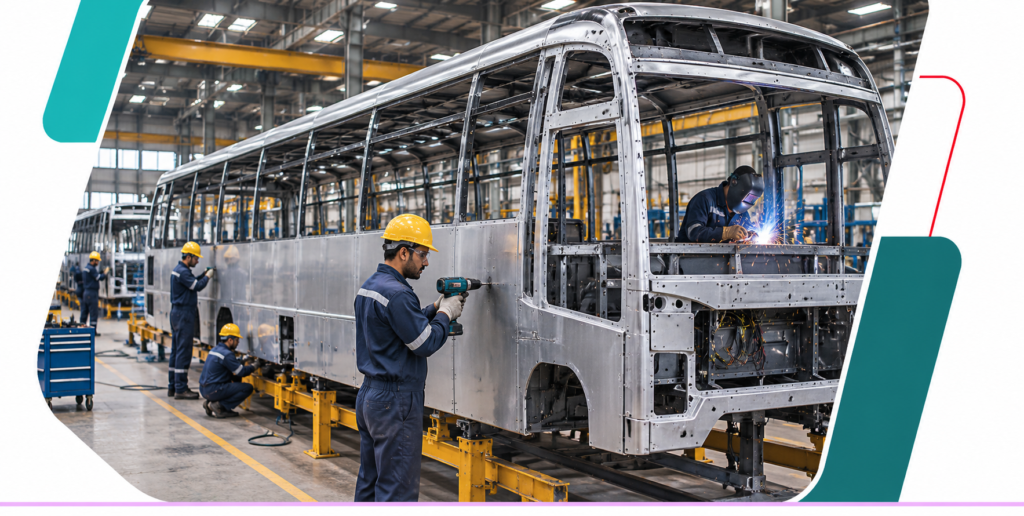
Bus body building projects across multiple locations, covering fabrication, welding and assembly. Layam improved production output, quality and workforce capability.
The Challenge
Parts shortages stalled the line. Uneven workloads held up progress. Assembly errors and inaccurate fixtures created rework.
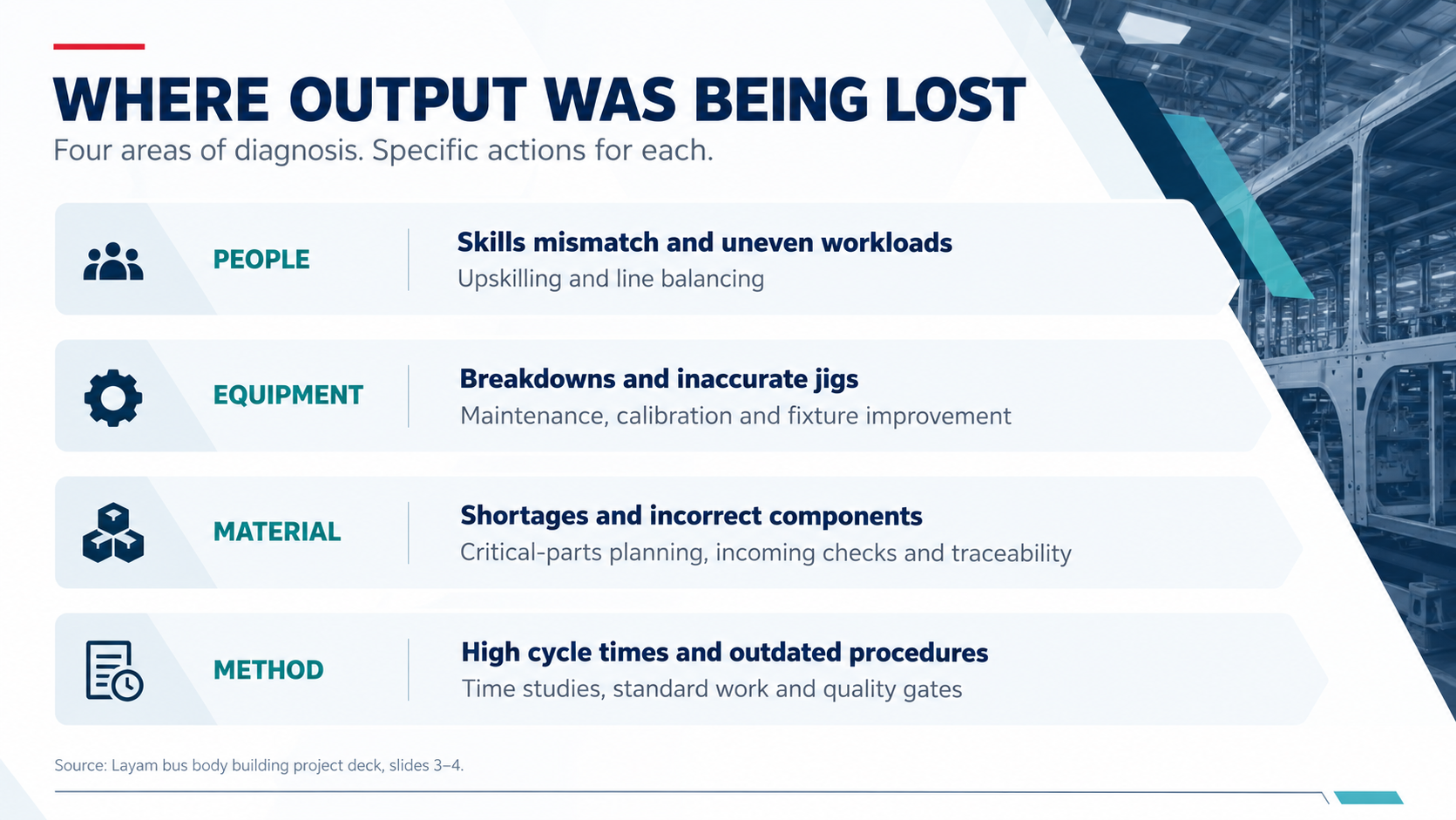
Skills mismatches, equipment downtime and outdated instructions compounded these delays.
The brief: increase output while reducing time lost to waiting and correction.
The Mandate at a Glance
Higher output per shift
Remove bottlenecks and balance work between stages
Fewer hours lost
Address waiting, shortages, breakdowns and rework
More consistent quality
Build verification into the production process
Stronger operator capability
Match skills to work content and develop critical skills
THE APPROACH
01
Diagnose the loss before changing the line
A 4M analysis examined people, equipment, materials and methods. Layam linked skills gaps to upskilling, body misalignment to fixture improvement, material stoppages to critical-parts planning, and high cycle times to time studies and standard work.
Standard work procedures and daily escalation addressed rework caused by unclear instructions.
02
Balance the work between stages
Manpower deployment followed the work content at each stage. Operator multiskilling and critical welding development supported line balancing, targeting waiting time and work in progress.
Hourly production monitoring tracked downtime from shortages, breakdowns or labour issues, including jobs blocked by upstream operations. Gantt charts coordinated work across stages.
03
Make fabrication more repeatable
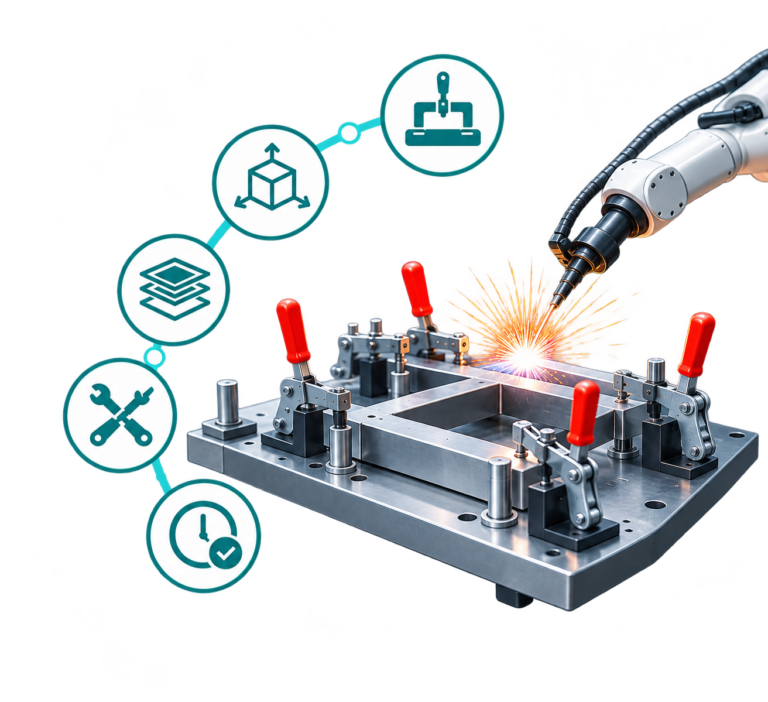
Templates, dedicated jigs and fixtures, locating pins, pneumatic clamps and mistake-proofing features addressed dimensional variation and incorrect assembly. Revised welding sequences and fixture design targeted welding distortion.
Cutting and nesting improvements reduced material waste. Preventive maintenance, tool-life tracking and shorter setup times addressed fabrication interruptions.
04
Prepare materials in the order the line needs them
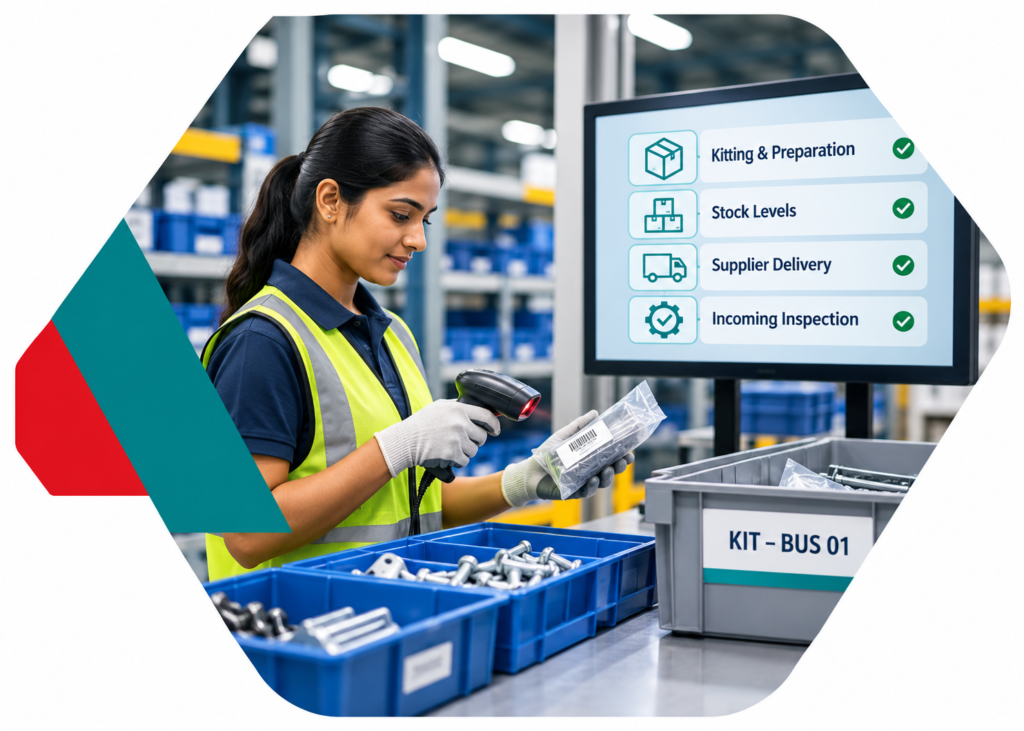
Advance kitting prepared parts for each bus in operation sequence. Shortage tracking, minimum and maximum stock levels, supplier delivery monitoring and critical-parts planning supported material availability.
Part and batch traceability identified materials, while first-in, first-out stock movement supported orderly consumption. Incoming inspection addressed incorrect or defective components before assembly.
05
Catch errors before they travel downstream
First-piece approval for jigs, fixtures and gauges; qualified welders and weld inspection; and fitment checks against defined reference points built quality into production.
Updated work procedures, quality gates and stage-wise verification standardised final assembly and addressed final-test failures. Inspection and correction at each stage helped prevent errors from travelling downstream.
06
Carry corrective action into management review
Periodic management reviews covered production shortfalls, the five leading causes of lost hours and rework, safety, quality and compliance. Frequent checks tracked critical-parts shortages.
Each shortfall was linked to corrective action, the relevant department and a due date, with weekly KPI tracking against targets.
07
The 60-day production improvement
Higher output. Fewer labour hours per bus. Less rework and downtime.
The Outcome
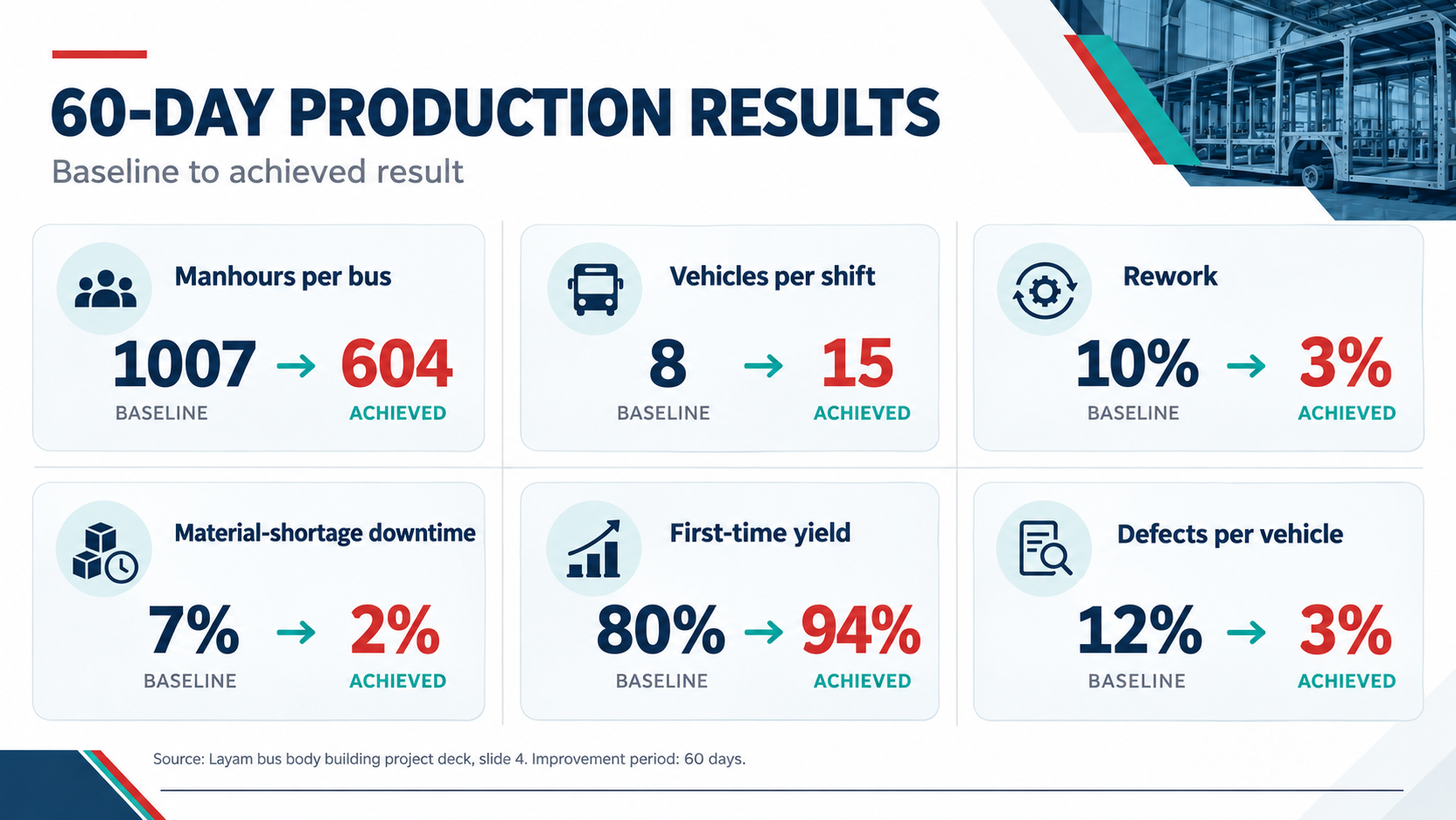
Layam increased shift output by 87.5% while reducing manhours per bus by approximately 40%. Quality improved alongside productivity: rework and defects fell, first-time yield rose, and material shortages caused fewer interruptions. These gains came from coordinating operator skills, workloads, fixtures, material flow and quality checks across the line. The projects also delivered shorter lead times, reduced rejection and employee skill development.
Why the Model Worked
A skilled welder cannot resolve a parts shortage. A complete kit cannot compensate for an inaccurate fixture.
Layam managed these dependencies together, connecting execution on the line with corrective action and management review.
For bus manufacturers evaluating contract manufacturing services, this means coordinated responsibility for people, process and performance within the agreed scope.
Where is your bus production line losing output?
Talk to Layam about the bottlenecks, rework and material delays affecting your production targets.