Layam connected trained teams, production support, stage-wise quality controls, on-ground supervision and action-led reporting around defined operational outcomes, from incoming inspection through final vehicle release.
Executive overview
The engagement combined contract manufacturing support and quality assurance around one operating model, built on a shared definition of quality and defined operational outcomes. Instead of treating quality as a final inspection activity, Layam embedded checks, supervision and reporting across the production line.
Incoming components were inspected before production. Fitment, orientation, assembly sequence and process adherence were monitored during build. Firewall checks, end-of-line testing, static and functional inspections, and pre-delivery checks created further control points before vehicle release.
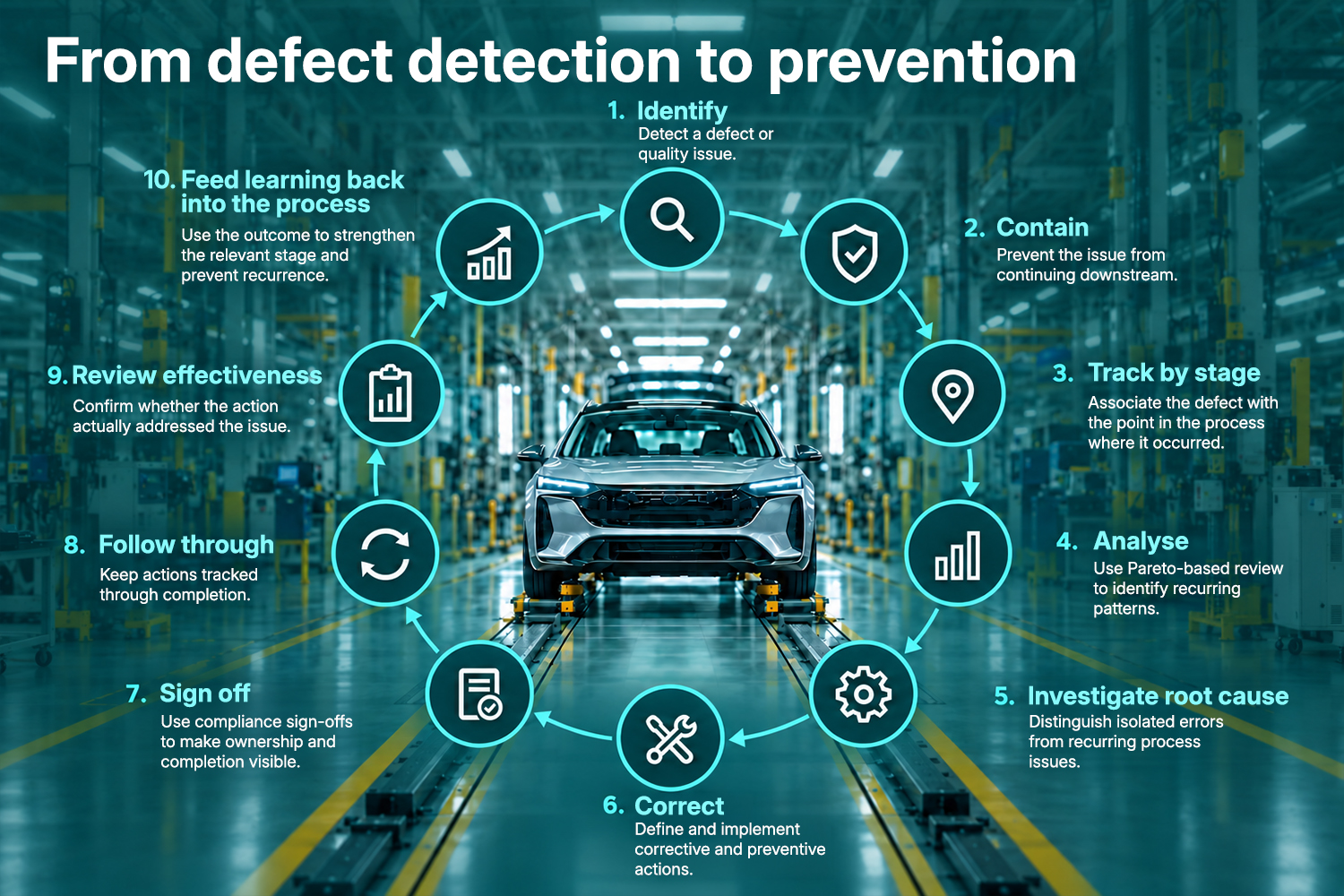
Defects were tracked by stage, reviewed through Pareto-based analysis and linked to root-cause investigation and corrective and preventive action. Daily quality-gate reporting, compliance sign-offs and effectiveness reviews helped keep actions visible through closure.
Reported impact
The
Challenge
The client was an automotive manufacturer with production and quality requirements across the line. Layam was engaged to support both execution and quality assurance—from incoming inspection through production and final vehicle checks.
The challenge was not simply to detect defects. It was to identify issues where they began, contain non-conforming material, prevent recurring process problems from travelling downstream and make ownership visible at every stage.
Incoming material
Components had to be assessed before they entered production, with non-conforming lots contained before they could affect subsequent stages.
In-process execution
Fitment, orientation, assembly sequence and process compliance had to be checked while work was being completed—not only after the vehicle reached the end of the line.
Final release
Multiple validation points were needed before release so that final inspection worked as a barrier, not as the first place problems were discovered.
Action and follow-through
Quality issues had to be recorded, analysed, assigned and tracked until corrective measures were implemented and reviewed for effectiveness.
Layam’s approach
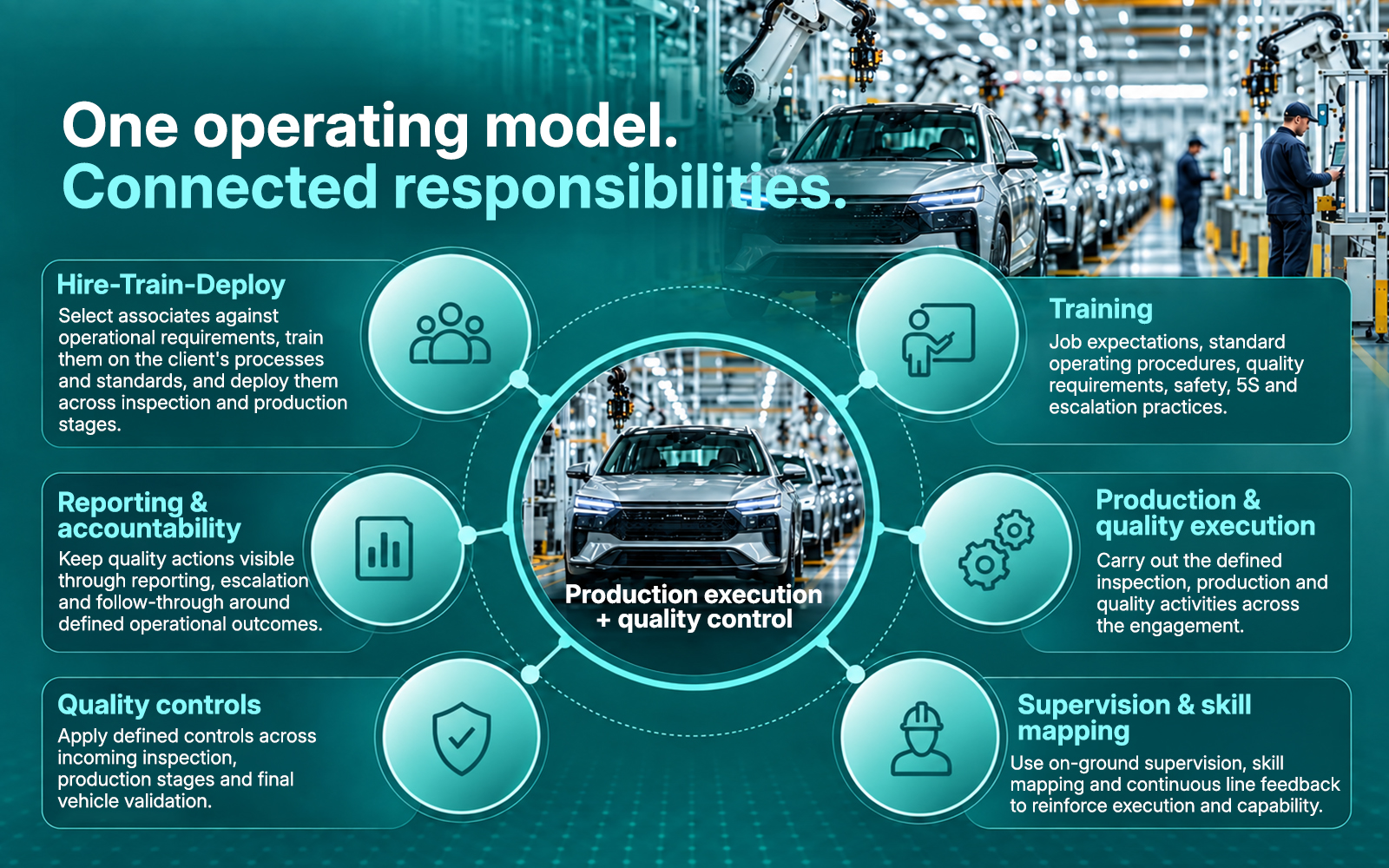
Layam combined its Hire-Train-Deploy model with process ownership and quality control. Associates were selected against the needs of the operation, trained on the client’s processes and standards, and deployed across inspection and production stages.
Training covered role expectations, standard operating procedures, quality requirements, safety, 5S and escalation practices. The aim was to make each role, required standard and escalation path clear. On-ground supervision, skill mapping and continuous line feedback reinforced learning and helped place the required capability at the right point in the process, supported by defined quality controls.
This connected production support and quality assurance instead of running them as separate activities. Layam maintained supervision and reporting while teams carried out the inspection, production and quality activities defined for the engagement, with Layam accountable for the agreed operational outcomes.
How the operating model worked across the line
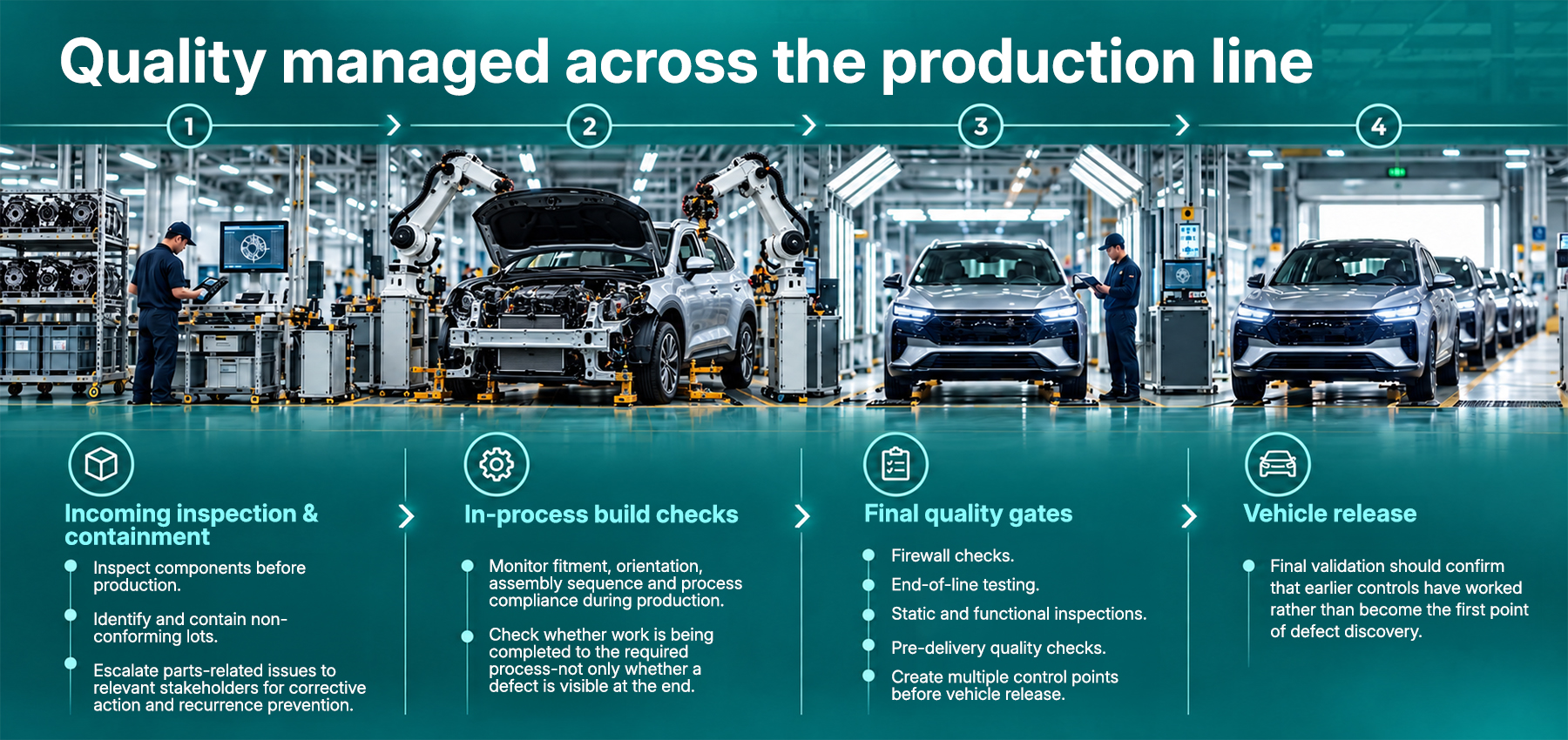
The work was organised as a connected quality journey. Each stage had a clear purpose: stop known issues early, monitor how the build was being executed, validate the vehicle before release, and turn defect data into corrective action.
01
Incoming inspection and containment
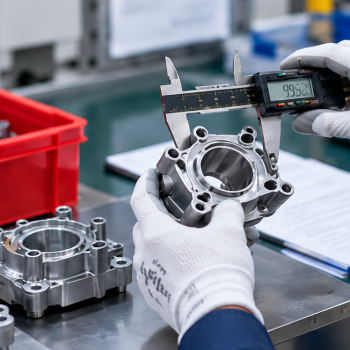
Incoming components were inspected before production. Non-conforming lots were identified and contained so known part-quality issues did not move into later stages. Parts-related issues were communicated to the relevant stakeholders to support corrective action and reduce recurrence.
02
In-process build checks
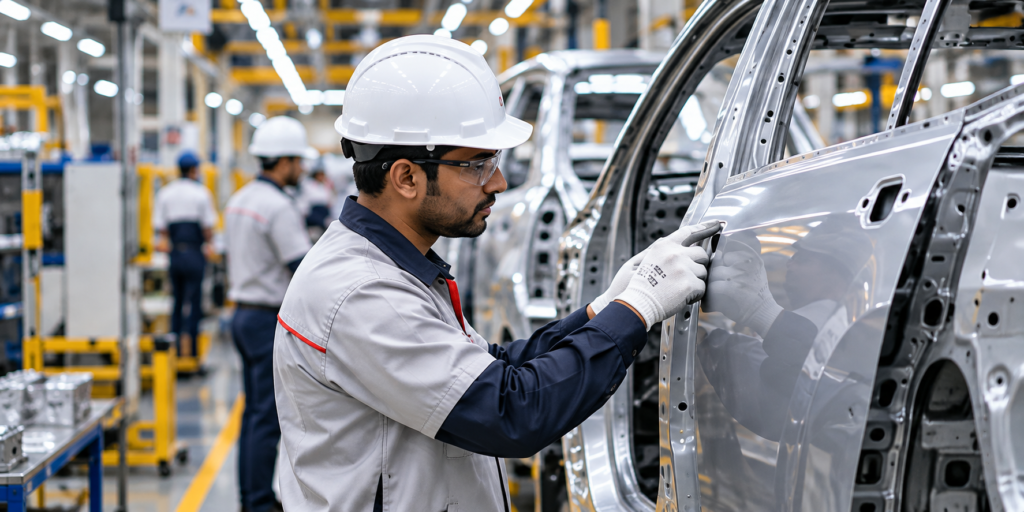
Teams monitored fitment, orientation, assembly sequence and process compliance during production. The emphasis was on whether work was being completed to the required process—not only whether a visible defect appeared at the end.
03
Final quality gates
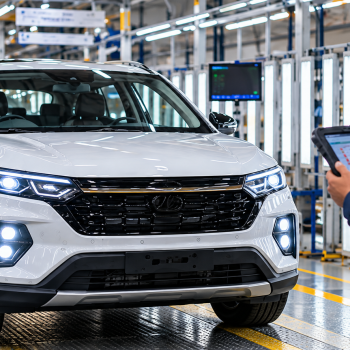
Firewall checks, end-of-line testing, static and functional inspections, and pre-delivery quality checks created multiple barriers before vehicle release. Together, these controls strengthened the final quality barrier and helped contain defects before customer delivery.
04
Reporting and corrective action
Defects were tracked stage by stage and reviewed through Pareto analysis. Root-cause investigation helped distinguish isolated errors from recurring process issues. Findings were linked to corrective and preventive action, with daily quality-gate reporting and compliance sign-offs keeping progress visible.
Follow-through and effectiveness reviews then tested whether the action had addressed the issue. This connected defect identification, containment, analysis, correction and verification back to the point where the problem began.
The impact
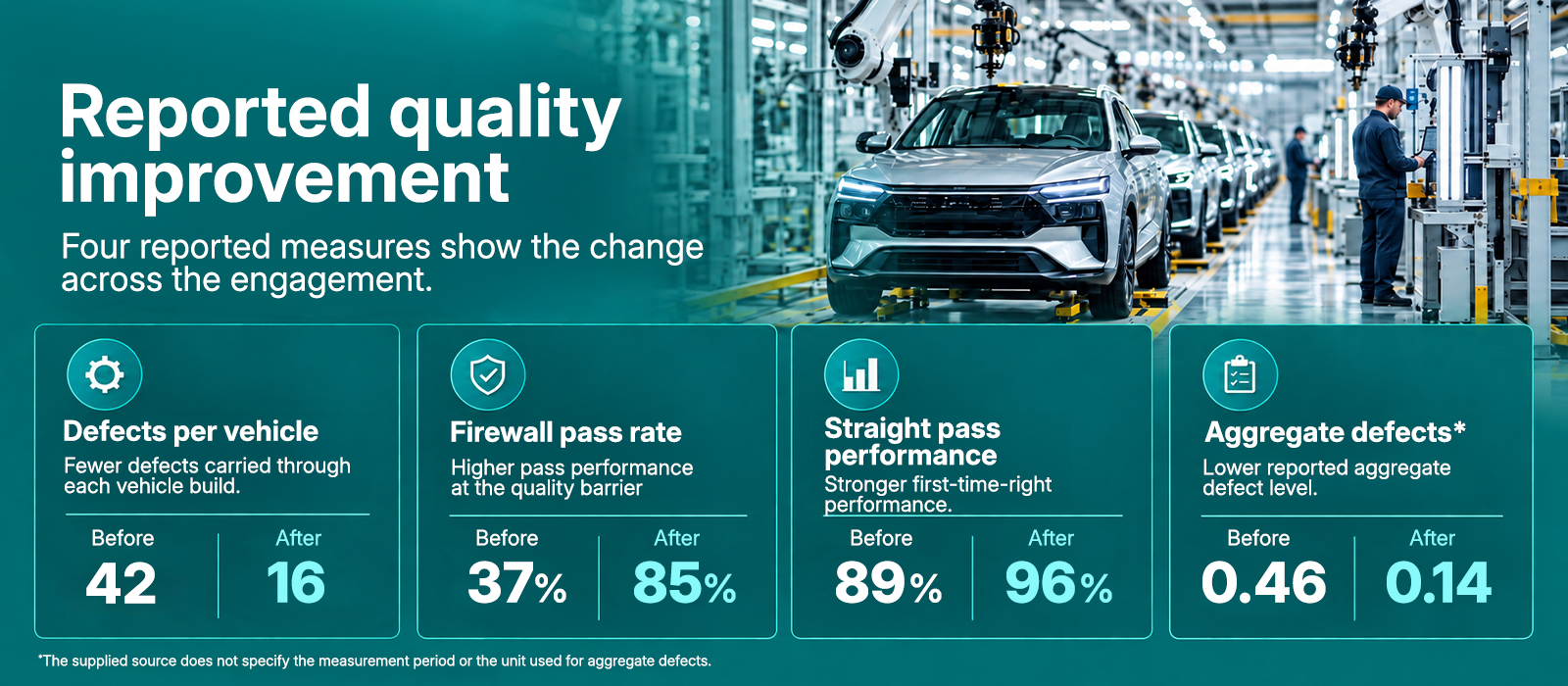
The engagement reported improvement across all four supplied quality measures: defects per vehicle fell from 42 to 16; firewall pass rate rose from 37% to 85%; straight pass performance increased from 89% to 96%; and aggregate defects moved from 0.46 to 0.14.
Beyond the headline measures, the operating model strengthened first-time-right quality, improved visibility across production stages and created a more disciplined feedback loop between production, quality and corrective-action teams.
What changed operationally
Quality became part of the way the line operated, supported by trained teams, defined quality gates and the daily use of defect data. Incoming issues could be contained earlier, in-process defects could be associated with the relevant stage, and recurring problems could be carried from analysis through corrective action and effectiveness review.
Responsibilities also became more visible. Teams understood the required standard, supervisors had greater visibility of execution and capability, quality data could be reviewed at the relevant stage, and daily reporting made open actions easier to follow through.
According to the supplied case study, integrating production support, quality assurance and supervision also reduced the need to manage disconnected activities through multiple vendors. That gave the client’s internal teams greater scope to focus on core production priorities, growth and customer delivery.
What this case demonstrates
Quality improvement depended on connecting people, process and performance around a shared definition of quality. The model combined capability selection, process training, process ownership, on-ground supervision, stage-wise checks, defect visibility and corrective action rather than relying on a single final intervention.
For automotive operations, the practical value is straightforward: identify issues closer to where they begin, make accountability visible, review quality data at the relevant stage and keep actions moving until their effectiveness is confirmed. The engagement shows how production support and quality assurance can be organised around operational accountability and measurable quality outcomes.
Visible ownership
Supervisors had clearer visibility of skills, execution and escalation across the line.
Closed-loop action
Issues remained visible until actions were completed and reviewed for effectiveness.
Discuss how Layam can strengthen quality and production accountability on your line.
A connected operating model can combine trained teams, on-ground supervision, stage-wise controls, reporting and corrective action around defined operational outcomes.